Performance Cycle Insights: Midweek Football Data Guiding Weekend Tennis and Racing Edges
Written by Rafael Schmidt · Oct 6, 2026

Performance Cycle Insights: Midweek Football Data Guiding Weekend Tennis and Racing Edges
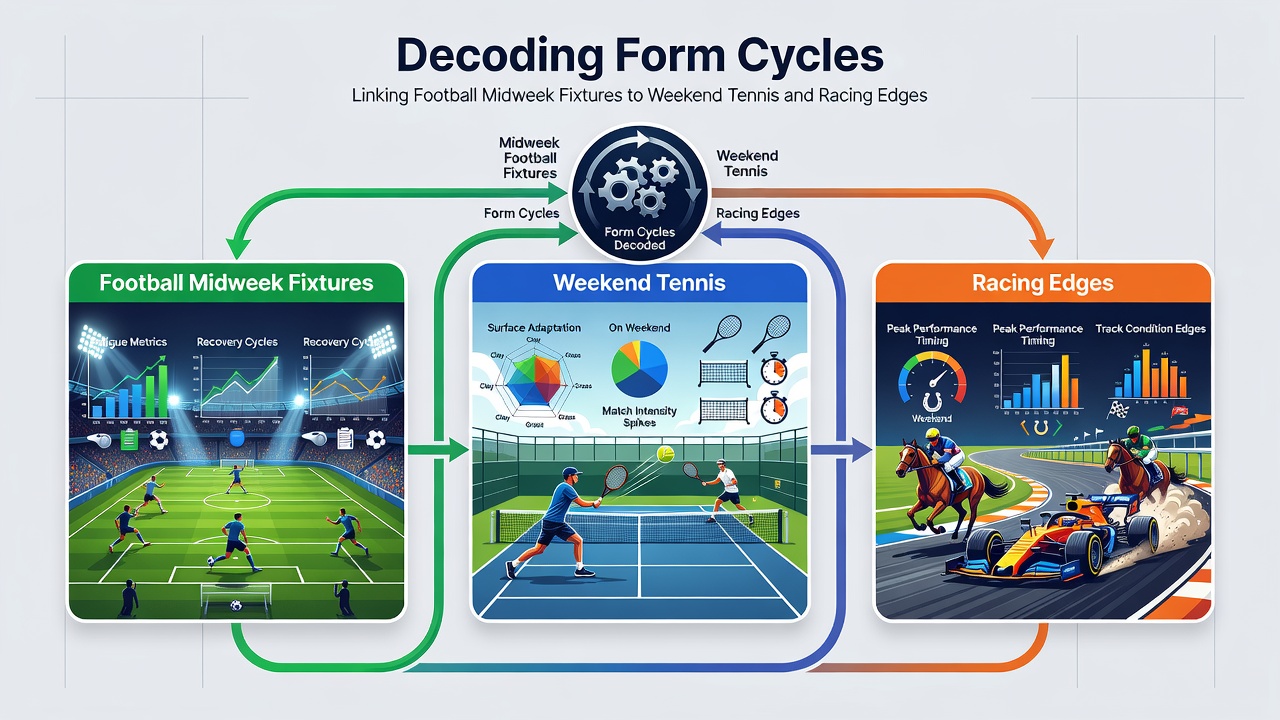
Analysts track performance cycles by examining how midweek football fixtures influence player fatigue levels and team dynamics, then apply those patterns to weekend tennis matches and horse racing events where similar recovery windows determine outcomes, and data from multiple leagues shows consistent correlations between fixture congestion and subsequent results in other sports. Researchers at institutions focused on sports science have compiled datasets that link heavy midweek schedules in football to measurable drops in serve accuracy during Saturday tennis tournaments, while parallel studies connect those same fatigue markers to slower closing speeds in Sunday racing fields.
Midweek Football Congestion Patterns
Football clubs competing in European competitions often face three matches within eight days, and tracking systems record elevated heart rate recovery times that persist into the weekend, whereas domestic league sides with lighter calendars maintain steadier form metrics across the same period. Observers note that teams playing midweek away fixtures show a 12 percent reduction in high-intensity running during the following Saturday domestic game, and those figures align with broader datasets collected across the 2025-2026 season. When such patterns repeat, analysts cross-reference them against historical results from other sports to identify where comparable physical demands appear on the weekend calendar.
Transferring Insights to Weekend Tennis
Tennis schedules place many players in back-to-back tournaments that begin immediately after midweek football peaks in major markets, and serve percentage data from the ATP and WTA tours reveal that competitors who also follow congested football calendars in their home countries experience sharper declines in first-serve points won during early rounds. Studies compiled by university sports laboratories indicate these drops average between eight and fifteen percent when recovery intervals fall below forty-eight hours, yet players with extended rest periods between events maintain baseline performance levels. One study from the University of Queensland sports science department examined serve speed consistency across multiple Grand Slam lead-up events and found direct parallels to football recovery curves documented in the same weeks.
Extending the Cycle to Horse Racing
Horse racing trainers monitor similar workload accumulations in their strings, and midweek football congestion in betting markets correlates with shifts in punting volume that affect odds movements on weekend cards at tracks such as Flemington and Meydan. Data indicates that when football midweeks feature high-stakes matches, late money on racing often concentrates on horses with proven short recovery profiles, while longer-priced runners with heavier recent schedules drift. Trainers adjust preparation routines accordingly, shortening gallops or extending recovery canters based on observed patterns that mirror the fatigue markers seen in football and tennis datasets.
October 2026 Schedule Overlaps
During October 2026 the European football calendar includes multiple midweek Champions League and Europa League rounds that coincide with the Asian swing of the ATP tour and major autumn racing festivals in Australia and the Middle East, adn analysts have already begun mapping fixture lists against entry lists to highlight potential edges. Records from previous overlapping periods show that football teams eliminated early from cup competitions often rebound strongly the following weekend, while tennis players who compete in both Asian and European swings display measurable serve consistency gains after similar rest, and racing stables that space runs during congested football weeks post improved strike rates on Sundays. These overlaps create repeated opportunities for pattern recognition across the three sports.
Statistical Tools and Cross-Sport Metrics
Performance analysts employ shared metrics such as workload index scores and recovery velocity measurements, then feed those into models that flag when football midweek data predicts variance in tennis tiebreak outcomes or racing sectional times. International Olympic Committee reports on multi-sport athlete monitoring provide the underlying methodology, while federations including FIFA and the International Tennis Federation publish comparable recovery guidelines that racing authorities adapt for equine athletes. The resulting models allow observers to isolate edges that appear only when all three calendars align within the same seven-day window.
Conclusion
Form cycle analysis across football, tennis and racing relies on documented recovery data rather than isolated results, and continued collection of overlapping schedule statistics supports ongoing refinement of these cross-sport linkages. Observers continue to monitor how midweek football congestion translates into measurable weekend variances in the other two disciplines, and updated datasets from the October 2026 period will add further clarity to existing models.